Saturday, February 1, 2014

Beauty and the Berry: The Story of the American Beautyberry


As communities grow, backyards are becoming smaller and less prominent. Roads are taking over considerable amounts of wildlife habitats and the places where our furry friends may have roamed and lived have become restricted. Landscapers have found that smaller plants do better in these small yards, but have they taken in consideration of native habitats for those other than the house owners? In my opinion (and of course you may have a different one), birds are a large part of our community. They are more than fluffy, feathered friends who bring delight to anyone's yard; they help to spread seed, consume pest insects, pollinate flowers, and may even control weeds by eating their seeds. So if you want to add in a couple of plants that help out with the bird scene, try out the American Beautyberry, Callicarpa Americana L.


The American Beautyberry lives up to its name with no hesitation. Typically the deciduous shrub grows 3 to 6 feet tall and wide; however, with optimal conditions it can grow up to 9 feet! Fortunately, these shrubs can be cut to maintain a more compact and smaller form. The leaves resemble a dark wintergreenish color, arranged alternately on the stem. When the reddish brown color of the new bark and light brown color of the older bark on the Beautyberry are paired it creates a warming color combination. The Beautyberry’s branches bow downward, increasingly so as the shrub grows larger. It gives the plant a droopy form, but nonetheless, it’s an elegant droop.


As you can see in the photo, the leaves and branches are a nice beginning to the main attraction of the Beautyberry. The berries of the shrub are what appeal to the birds and your eyes! These clustered berries grow on the stems in October as a dark magenta like purple, though sometimes they may even appear white. The berries will continue into early winter, even after the yellow autumn colored leaves drop.
 

The berries are not the only attraction to this shrub. From June to September, the American Beautyberry also flowers! The shrub adorns a light pink and small bundled flowers that are arranged at the nodes of the stems. The stamens are long, giving it that extra frilliness and elegance that help enhance the word 'beauty' in Beautyberry.
 
The requirements for this shrub are quite simple. In order to have full berries and blooms, it needs full sun. Yet, it could take a little bit of shade. Because it grows is statewide in the Southern half of the U.S., particularly in our zone 7a, it will need a reasonably well drained and reliably moist soil (but this does not mean it needs watering every day! For more help, contact us). Overall, the shrub does not need a lot of maintenance. For those who want a plant who will just do its thing, I suggest this one.
 
 
Picture Source:
1. http://www.wildflower.org/plants/result.php?id_plant=CAAM2
2. http://www.fruitipedia.com/american_beautyberry_Callicarpa_americana.htm
"Gardening with the Native Plants of Tennessee" by Margie Hunter


Written by Michelle
 
Want help with your landscape? Visit our website and give us a call
at perennialsolutionstn.com


Friday, January 31, 2014

The Wintertime Gardener


Wintertime in Middle Tennessee can be a confusing time for gardeners.  It can be freezing cold for several days, followed by one or two warmer days and drastic temperature changes. 


What’s a gardener to do during winter?


The answer is a laundry list of things, such as focusing on planning and preparing for spring.  However, February especially tends to be my busiest month for maintenance and the readying for spring.


Spring preparation first and foremost means planning, and February is really your last chance to do it without feeling the rush.  Finalize your plans now.  Pick a designer or design to work with and get started before everyone gets else gets busy with his or her projects as well. Tip: During slow times, it is possible to take advantage of sale prices on plants and other items, such as services. If you look around, there will be places seeking to get rid of old stock before they start heavily replenishing again in the spring.


Pruning is probably the largest chunk of your garden maintenance, and the on again off again relationship with your pruners begins now.  The first week of February, I always suggest cutting back all of your ornamental grasses.  Cutting them back now ensures that the growth they put out in a few weeks will be unobstructed by unsightly dead plant material.  It also encourages a lot of vigorous new shoots on things like pampas grass and miscanthus.  Later in the month you’ll need to prune back your roses to keep them under control.  The yearly hacking back of grape vines can occur now, along with any other necessary cutbacks.  And don’t forget any fruit bearing plants you have such as apples, blueberries, and other fruit bearing plants. These plants need their shaping and selective pruning done before they begin blooming.


It is recommended that you finish up your transplanting of fruit trees now.  The time for planting them with the least amount of summer stress is quickly ending, and getting ahead of the Tennessee’s heat can be crucial to a transplant.  Of course, this also applies for anything you still have slated for moving around the yard.  As an added bonus to this time, if you started any of the hardier and larger cole season crops (broccoli, brussel sprouts, etc.) in January, they can be moved outside to harden off in any cold frames you have before bringing them out for planting.


My favorite thing this time of the year, however, involves vegetables. I grew up helping my grandfather garden, and at a young age I learned this is the time of the year when things were beginning to happen.  At the beginning of February, broccoli and cabbage  (as well as other vegetables that need a long, cool growing season) should be started indoors as seeds. This will help with the transplanting of the plant later by making them stronger and giving them a head start. By the middle of February, you need to have started such crops as peppers and tomatoes to be planted once it has warmed up outside. At the end of the month, leafy greens and root crops can be directly sown into beds or cold frames to get your fresh vegetables going again.

 
That’s a lot of stuff to do in one month! Although it can be difficult gardening with the fickle weather of Tennessee, it’s worth it.  Planning now and getting all this pruning and other maintenance work done will help you enjoy the growing season for the fun stuff- like planning new landscaping ideas or growing vegetables.  Not only is that nice to think about; but as we begin the transition into spring, keep in mind that everything you do now will serve as an aid in your garden’s overall success. Selectively pruning and cutting back or trimming plants at the correct time can greatly improve the growth, blooms, and shape of most material. 


Do you have questions? Would you like a quote on plant maintenance? Call us at (615) 603-6542!
 
Picture Source:
Michelle's personal photos
 
 
Written by Richard

Monday, January 20, 2014

Check out the Sourwood Tree, a bitter Tennessee native.


     The first time I heard the word 'Sourwood tree', I immediately thought of a green, tart tasting wood that developed cankers and twisted grey branches that loomed over you with an ominous feeling... or simply sour patch kids in a tree form. Obviously the name for the tree was an indication of what it tasted like. Sourwood, or Oxydendrum arboreum (Lily of the Valley tree or Sorrel-tree), have beautiful dark green  and shiny appearing leaves and when chewed on they taste rather sour. If you come across one, I suggest tearing off a leaf and seeing what all the fuss is about! (But only if you know for certain it is a Sourwood, it may not be a good idea going around eating leaves off of random trees...)
     

    That isn't the only thing about this tree that makes it unique and great to have in your yard. These trees are slow growing with an oval to pyramid shape. Typically, they reach 25 to 30 feet tall and wide, but in prime conditions such as the right soil, application of water and sunlight, they may reach 50 feet tall! This upland forest tree is good for ornamental landscapes and intermediate-


sized tree requirements. One of the best attributes of  Sourwood tree is its beautiful red/maroon autumn leaf color. Indeed, this can be a very desirable characteristic when planning for seasonal aesthetics in a yard. If you were to walk outside and take a look around at your neighbor’s, most likely you would see several.


    To elaborate quickly on the requirements for the Sourwood tree; this native tree of the Southeast is from the uplands, which equates to moisture and well drained and non-compacted soil! Sourwood trees prefer sunlight to partial shade, though in full sun the flowering and coloring of the leaves are more prominent. Now, to continue on...


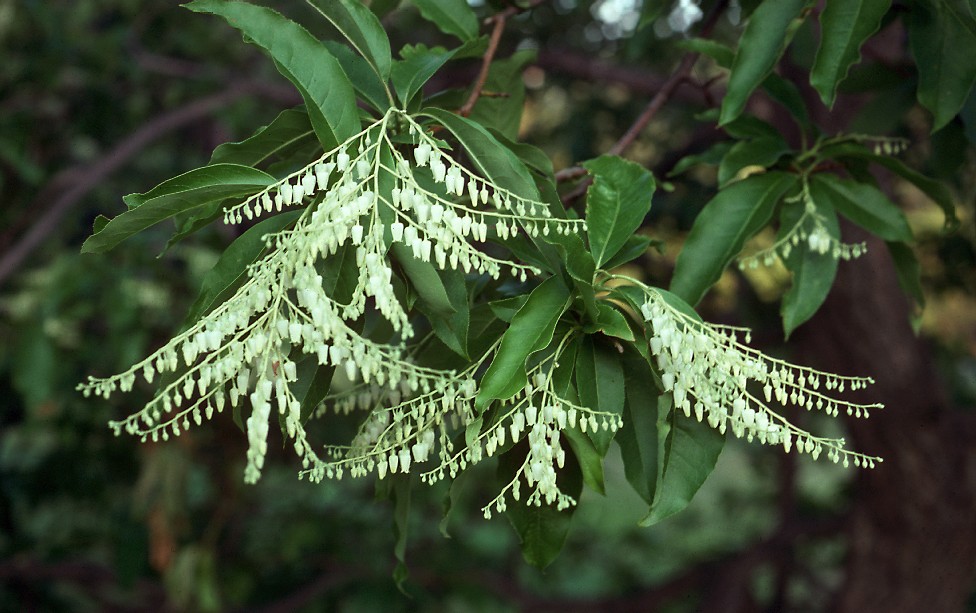
    What draws you in further about the tree are the blooms the Sourwood displays. By the time the drooping red foliage has appeared, the flowers have become little pods of seed for birds to devour. The white to creamy colored blooms are shaped like little urns or pots, giving the tree a very frilly and elegant appearance. There are few trees that I have come across that have blooms such as these. They would do well even as flower arrangements for weddings or celebrations.

    Oh, but these flowers are more than their looks! These little bells make some of the best tasting honey. This news is good for those who would like to try some beekeeping or already skilled beekeepers that are looking for a different kind of honey to produce. In the Southeastern area, Sourwoods can be a great contribution to your landscape, in being native to our zone, 7a, and it is sustainable. Not only are you planting a tree it's breath taking, but also because you can utilize this tree for multiple things!


Picture source: 


Are you interested in a Sourwood tree for your yard?


Perennial Solutions offers consultations!

Please see our Landscaping Design and Installation Services page for more information!


Article Author: Michelle


Do you have a question about our services or the article?

Shoot us an email!

Thursday, January 16, 2014

An Introduction to Sustainable Planting.

Author: Richard

A Brief Introduction to Sustainable Landscapes

 
Sustainable is a word that can pack a lot of meaning- depending on what it is that you’re referencing.  So what happens when you’re using it to describe your landscaping?  Some people would think that it would be more expensive or difficult to maintain a "sustainable" landscape, others might have a mental picture of a patchy lawn full of native grasses and cacti.  However, what sustainable really means is that it’s a landscape that makes the best use of the available space with the fewest resources needed.  This means it will likely meet the following criteria:


  • Cost Efficient
  •  
  • Functional
  •  
  • Eco-Friendly
  •  
  • Resource Efficient
  •  
  • Visually Appealing


 A good designer will always help you create a landscape that is functional and visually appealing. 
Choosing a consultant with an eye towards native plants, site needs, and low maintenance materials will help you keep it sustainable and less expensive.

     Native plants are an excellent choice for the sustainable landscape because it doesn’t take as much water, fertilizer, or pest control (if any) to maintain them.  Such plants prove cost effective in the long run and help local populations and native wildlife.  As a bonus, Middle Tennessee offers a wide and unique range of native perennials, shrubs, and trees found both in and around our state.  When natives can’t help solve a site problem or need, our climate (Cold Hardiness Zone 7) allows for a plethora of other plants that can be used in a landscape. Also, remember the importance of  verifying that plants you would like to use are non-invasive, otherwise it could spell trouble.

     Carefully choosing native and also non-native plants requires knowing your site’s light, moisture, soil, and spacing needs.  For example, witch hazel is a beautiful shrub, but it doesn’t belong backed up against the house. Hosta, a non native, does not normally survive a spot that sees bright afternoon sun.  Choosing the right plant for the right place keeps costs down by helping to ensure the long-term survival of the selections as well as reduce crowding.  It is an all too common occurrence that seven plants are installed where five or even fewer will do.  As is frequently the case, these things are all interlinked, because properly matching plants to their site conditions reduces not only the cost at install but future costs as well. This is on of the reasons why selectively picking a suitable designer and landscaper is so important for a consumer!

    A sustainable landscape doesn’t have to be expensive and it can, as mentioned above, be a good money saver.  Sustainability makes sense, and your choices can even extend beyond the yard.  Planting a shade tree to the east and west of the house can greatly reduce your electric bills, and a well-placed hedge of evergreens as windbreaks can help relieve some of the costs of heating. Even a small backyard space can be used to grow fresh food and help maintain your health and supplement grocery bills. (Not to mention gas to the store!) Your choices can have a major impact on many aspects of your life.  Choosing the right plant for the right place and looking towards the above requirements will allow you or your consultant to put together a beautiful landscape that helps you, your budget, and your environment. 

    To find out more about PERENNIAL SOLUTION'S landscaping design and installation services, click below!
http://www.perennialsolutionstn.com/#!services/c21r


For more information, check out this link from the Colorado State Extension Service!


Friday, January 10, 2014

Witch Hazel, a great Middle Tennessee plant.


"Save water, plant native trees."

    I have this saying on a sticker that's plastered to my water bottle, the water bottle that I took with me everywhere -from friend's houses, school and to work. Often I had questions about what that particular sticker meant. Why plant native trees? How does that save water? It is a common question that has a rather simple answer: they are acclimatized to our location and require less water in order to survive! 

    So where is this going, then? Quite frankly, native plants are often overlooked. In order to keep a balance between invasive species and those commonly used in landscape designs, Tennesseans should incorporate more natives in their yards. Not only are they less for the owner to take care of, but they offer habitats for native wildlife and have other unique qualities. Sustainability is a huge benefit when it comes to using native plants. Natives can be used to prevent soil erosion near water banks or for multiple uses, such as food and medicinal means. This brings us to the native plant we will focus on today:


             The American Witch Hazel, Hamamelis virginiana. 


Picture source (both) : http://madisonsflowers.com/

    In fact, this is one of my favorite plants. The strange quality it brings to your garden results in a fantastic focal piece and fall blooming tree. It is a good tree for the South Eastern area, zone 7a (if we are to be specific about our location). The American Witch Hazel grows 15 - 20 feet tall and wide, normally, but can grow up to around 35 feet high and has a rather open and round crown. For those who want a smaller tree for their yard, this tree is the one for you!

     Unlike many petals we see, the Witch Hazel offers fragrant thin, fringe-like elongated petals in a light, buttery colored yellow. These flowers are often clumped together on the oddly crooked and smooth gray branches of the Witch Hazel. In October to November the blooms will appear amidst the yellow, oval and wavy toothed fall leaves. The flowers may even stick around after the foliage has dropped!

Typically, in the wild native Witch Hazels are found close to river banks, in relatively moist soil (such as a bottomland) and under the canopy of other larger trees. These shrubs are more common in the South Eastern zone compared to the West.


    So, if you would like to have this tree planted in your yard, keep in mind that it will do best in part sun to light shade. Well drained soils that are slightly acidic are the best conditions for the tree. Considering that it’s natively found near water, it will appreciate a wetter situation rather than a dry situation; it will not take on dry conditions easily.

    Witch Hazel is often used for medicinal means today, as it was in the past. For instance, Witch Hazel is used for reducing irritation and razor bumps after you shave, whether it your legs or your face! As well, it also prevents in grown hairs. Did you know that Witch Hazel is also good for putting poison ivy to reduce irritation. Talk about some instant relief! 


              For those of us who just want a bright pop in our

garden, or something different from the rest of your

neighbors, this could be a great shrub for you!

Please see our Perennial Solutions

Landscape Design and Installation page for

more information about our Landscaping services

featuring native plants!


Article Author: Michelle

Do you have a question about our services or the article?

Shoot us an email here!

Tuesday, January 7, 2014

Winter landscaping solutions.

“Can you plant anything in winter?" is a question that I’m asked at least once a day, beginning in November.  The answer definitely varies depending on where you are, but Middle Tennessee is fortunate in that our winter weather is moderate by comparison and those who live here can get a lot done while the ground is freezing in other places.  So what is a gardener or homeowner to do during the coldest months of the Tennessee year?  I present to you :
 

The Top 10 landscape and garden things to work on while everyone else is trying to beat the winter blues!


10. Dormant Seeding. 


No gardening list is complete without a mention about the best and worst thing in any landscape: grass!

 Dormant seeding is simply sowing or over seeding fescue grass when the seed has no chance of germinating quickly.  It can take two weeks and a lot of 40° F+ days for fescue seed to actually begin growing. Keep in mind that most people will have issues getting this to happen in October. Unfortunately, although it can be done during slower times, winter sowing of grass has been shown as slightly less effective than doing it in the fall.


9. Cole Season Crops.

Planting winter vegetable gardens is best done early in the winter or by mid fall, as recommended by the UT Extension agency, but you can put a handful of plants out when it’s cold outside and still harvest many of them all winter. (A sustainable supply of fresh lettuce and carrots all winter? Yes, please!).  One last thing, although it may seem wrong, ‘”Cole” is the proper spelling of this term; a lot of people use the term  “cool” season when it's really “Cole” season. (Where the term comes from is an entirely different story!).


8. Bulbs. 
 
For spring bulbs, our long fall temperatures come into play.  It’s best to plant your bulbs by Thanksgiving weekend, but you can still plant until the week after New Year’s (depending on whether or not you are able to dig).  Seasonal bulbs, such as amaryllis, have other considerations this time of year.


7. Fruit and Shade Tree Care.

When is the best time to prune trees?  Answer: Now! Prune in late winter. 
 
You want to prune now to shape up your trees and reduce fruit load on edibles (Remember, edible plants aren’t just for gardens and orchards!).  The second week of February (as long as the temperatures are above freezing) is the best time for dormant spraying of your trees to help reduce pest and disease issues in the summer. Some considerations that will need to be made here will be for organic or greener options, but with these products you’ll still need to check the various vendors and their distributors for the best application times and rates as these will vary. All of this applies to fruiting vines and shrubs as well, but double check with your state extension service for specific varieties.


6. Research.
 
This goes hand in hand with planning. Cold days and colder nights are a great time to start looking up perfect varieties of plants for your yard, peruse seed catalogs for that perfect heirloom or rare organic vegetable, and also review recommendations for landscapers you’ll want to use for the planning and planting stages of your property. In the long run, proper planning of your landscape will help save time, money, and stress. Take advantage of this time off to look for what works for you. (Find out more about Perennial Solution's landscaping services here.)
 
You might even take a class sponsored by your local garden center or agricultural extension office!

 
5. Maintenance.
 
If you haven’t done it yet, pick a warm day and get out there and clean up vegetable beds and clean out birdhouses to prepare them for spring. However, hold off until late March to prune back your perennials.  Have a messy fence row? If you couldn’t find the time (or someone) to do it in the summer, now is the perfect time to get in there and clean it up.  You won’t have to worry about bugs, snakes, or most of the other things that keep us from thinning it out the rest of the year.  Speaking of thinning, did you know the first week of February is the time to cut your ornamental grasses? It is recommended to cut them back to four inches off the ground.  This is just one of the many more things to be pruned during this time! For more info on seasonal work, visit our services page


4. Transplants.
 
 If you want to be self-sufficient and grow your own vegetable transplants [ ](or if you are unsure that you have right starter plants for heirloom varieties), several warm season and lots of cole season varieties will need to be started by Mid-February(http://trace.tennessee.edu/utk_agexcrop/45/)
  Of course, that means you may have to set up a growing station. Then, just before it gets warm again in February, you will have the next best chance again to easily transplant trees and shrubs in your yard again. If you are interested in spring services to set up a garden in your backyard, please Email us to get started on a quote!


3. Planting trees and shrubs. 
 
Honestly, in Middle Tennessee I only experience two times you don’t want to plant: when the ground is frozen (usually doesn’t last more than a couple days) or when we’re hot and dry (most of the summer).  Given that information, extension services and I recommend planting the big and hardy stuff from Mid-October to Mid-January.

Why is this the best time to plant?  Lots of moisture and cooler temperatures make it easier to establish plants (especially large trees) without stressing them out, like with high temperatures and too little water.  So for a lasting yard, put the big stuff in when it’s cold!


2. Watering new plantings.
 
Yes, you have to water in the winter! Root systems are still growing and anything transplanted in the last year doesn’t have access to the moisture it needs to keep roots hydrated and evergreen leaves healthy through the freezing weather. Depending on size, slow pour between two and five gallons of water a week on these plants if we go a couple of days without heavy rain (especially when temperatures are in the teens for more than a couple of nights). See more here.


1. Planning.
 
 If the weather outside is frightful, planning indoors is delightful.  Now is the time to sit down and plan the views you’d like for next year, the planting beds you nagged yourself about all summer, or that vegetable bed that would make eating healthy so much easier. Sit down, put pen to paper, and come up with ideas you'd like to see come together and find someone with experience to help lay out your ideas. Your budget, sanity, and dreams will thank you now for looking ahead on this planning! Find out more about our landscape design services here!


There are a lot of things that a person can work on in the garden during the winter, and despite everything listed above there is even more that I can suggest be done.  Winter can be a very busy time in the garden. So, yes, you can plant now and also stay busy during the winter-time! 


Author: Richard

Have a question or comment? Send Richard and email.